- Viking service
- Northwest Side
- Independent
A range that will not lightis a diagnosis,not a guess
Independent Viking repair across Logan Square, Wicker Park, Avondale and Portage Park. Ranges, ovens, built-in refrigeration and dishwashers — measured before anything is replaced, and priced before anything is opened.
- Service call
- $89, credited
- On site
- 8:00 am – 8:00 pm, seven days
- Dispatch
- Answered 24/7
What people said afterwards
Rated 5 from 1138 reviews
Water kept collecting under the drawers and I was mopping it out weekly. The drain had iced at the elbow. He cleared it, fitted the clip that keeps it open, and the pooling stopped.
Marisol V. · Wicker Park
Door sagged and heat poured out along the top, enough to mark the cabinet above. New hinges and a gasket, aligned square, and the fronts have stayed cool since he did the work.
Perdita F. · Wicker Park
Two of the sealed burners had gone lazy and one refused to catch at all. He cleaned and reset the igniters, replaced one that had cracked, and every position lights on the first click now.
Bogdan R. · Logan Square
Coverage
Four neighbourhoods, one route
The Northwest Side run and nothing beyond it. A short list is what makes a same-week slot a real offer rather than a hopeful one.
-
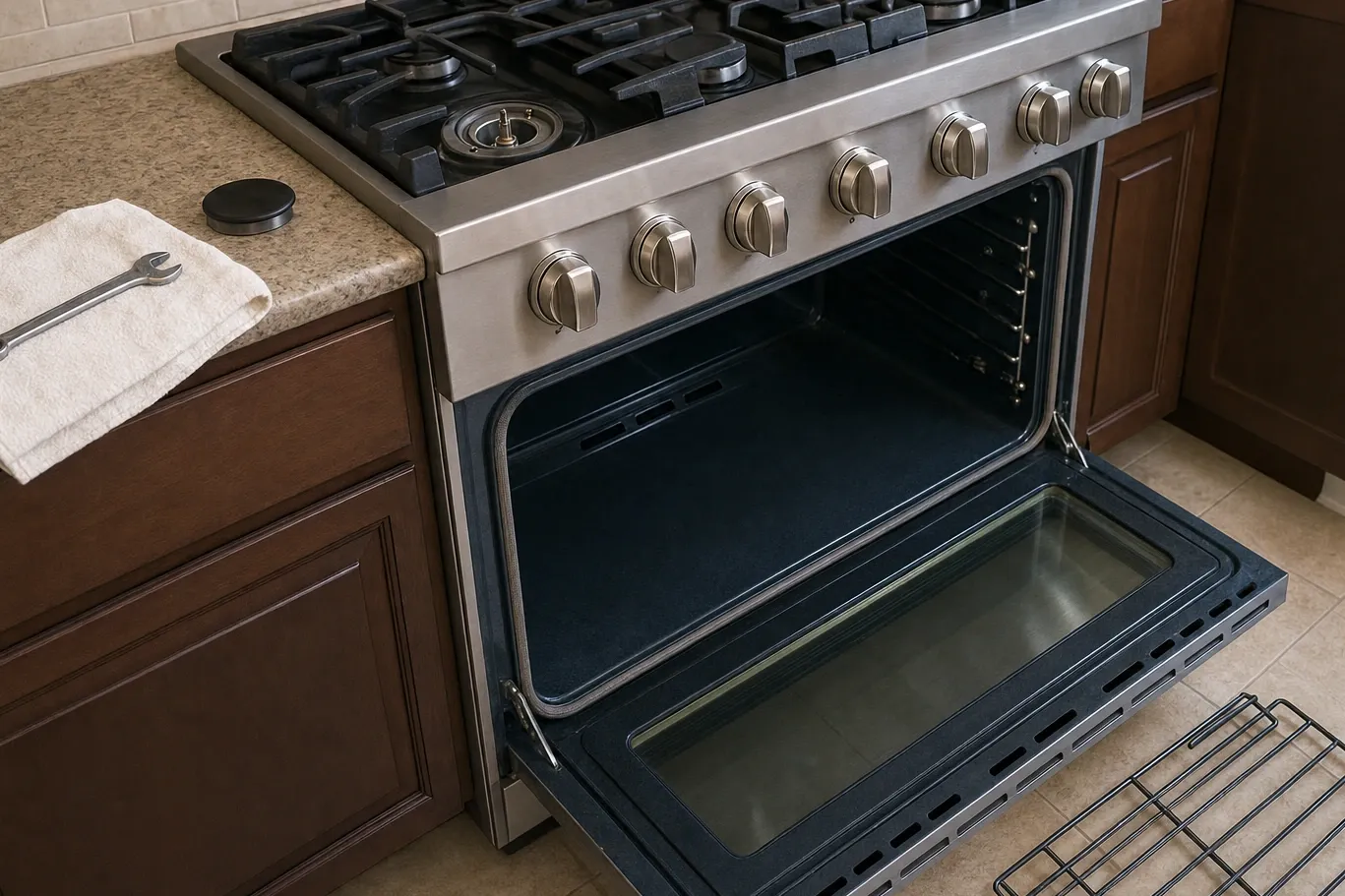 Logan Square 60647 Greystones and 1890s two-flats along the boulevards, most now gut-rehabbed with a professional range built into the old chimney wall and a hood ducted up through three floors.
 -
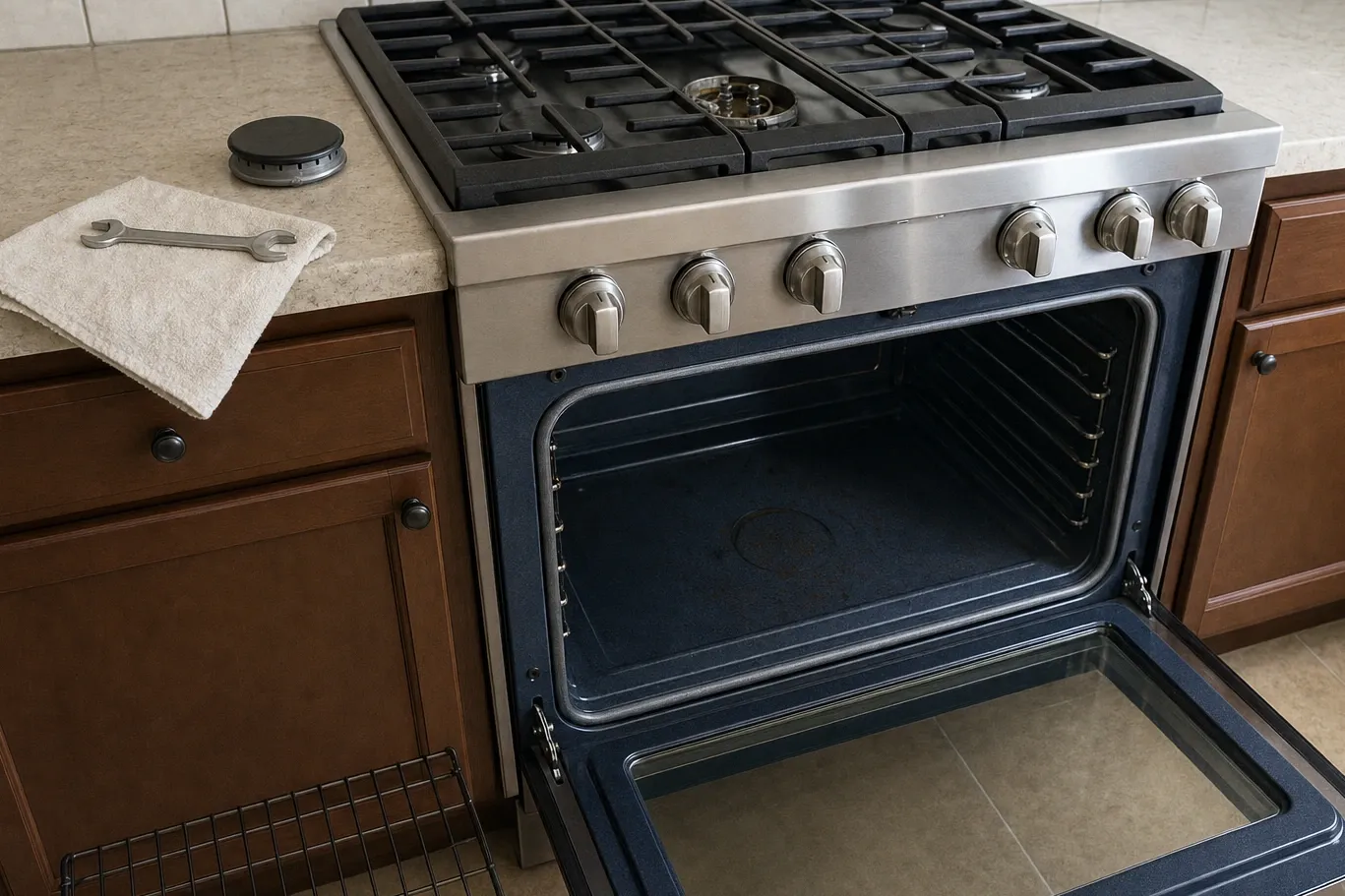 Wicker Park 60622 Workers' cottages beside new condo conversions over ground-floor retail. Kitchens here are often reached from a rear stair and a wooden back porch rather than through the front of the building.
 -
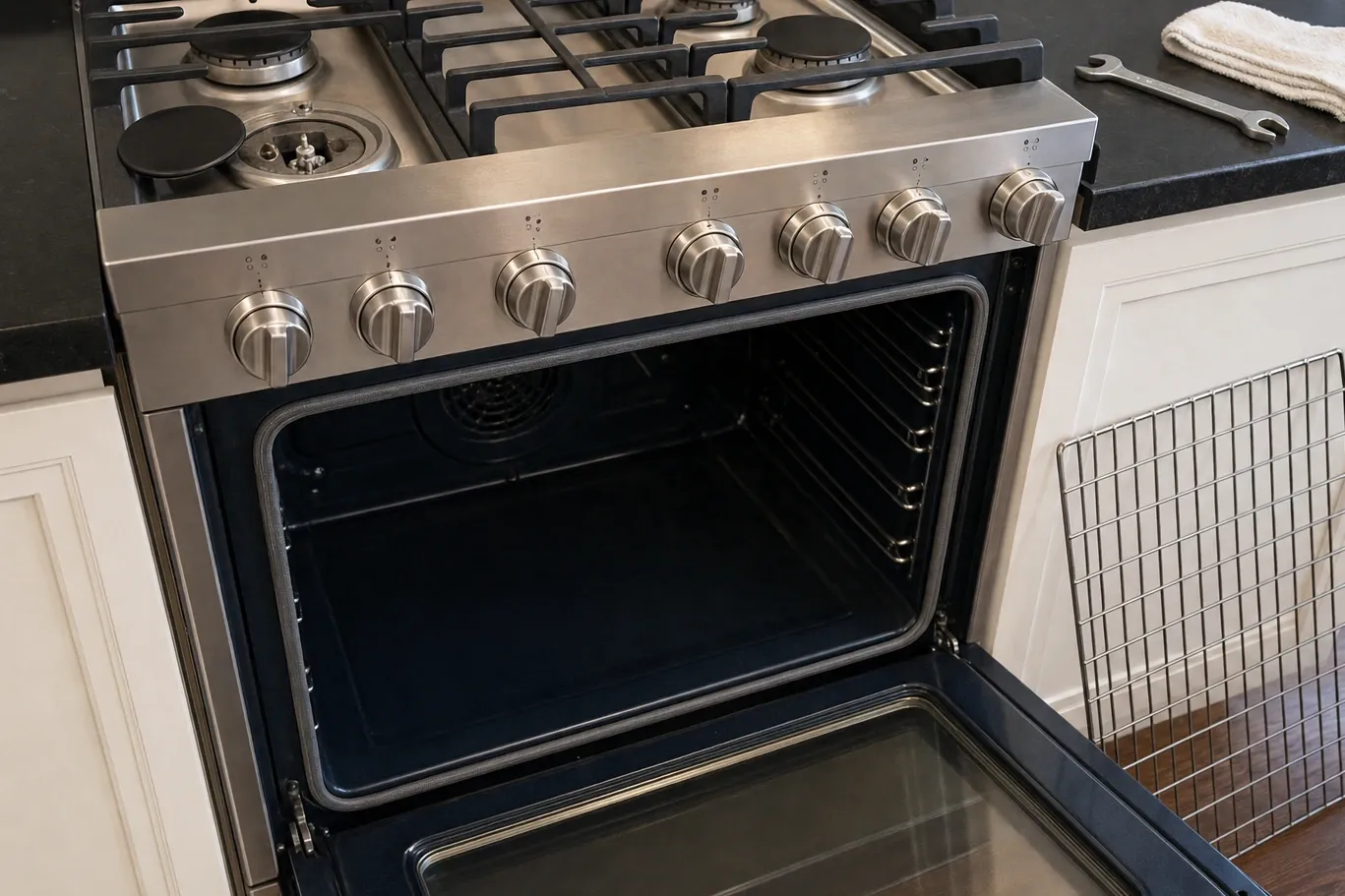 Avondale 60618 Brick bungalows and Polish flats with the kitchen at the back of the house and one narrow doorway into it — the constraint that decides how a range or a column comes out.
 -
 Portage Park 60641 Nineteen-twenties bungalows on wide lots with side drives, most with an original kitchen rebuilt at some point around a 36-inch range and a run of cabinetry that was cut to fit it.
How this works
Four things worth knowing before you call
- One trade, one brand
- Viking ranges, ovens, refrigeration and dishwashers. We do not also do washers, dryers or HVAC, and we are not a dispatch desk that subcontracts the visit on.
- Gas work taken seriously
- A range that will not light is a gas appliance before it is an inconvenience. Orifices, regulators and connections get checked as part of the diagnosis, not as an upsell.
- The price before the panel
- A firm figure covering parts and labour, agreed in your kitchen before anything is ordered or opened further. Nothing is replaced on suspicion.
- Independent, and it says so
- An independent service company. Not Viking, not an authorised agent of Viking, and the footer of every page says so.
Asked on the phone
The questions that come up before booking
-
Which parts of Chicago do you actually cover?
The Northwest Side run: Logan Square, Wicker Park, Avondale and Portage Park. Those four sit on one route, which is the only reason a same-week slot is realistic rather than optimistic. We would rather tell you we do not come out to Hyde Park than book you a window we cannot keep.
-
A burner clicks but will not light. Is that dangerous?
It is worth treating seriously and it is usually simple. A burner that sparks without catching is normally a cap seated wrong, a blocked port or a wet igniter after a spill. What you should not do is keep clicking it: the gas valve is open while it sparks, so leave it off, open a window and let someone look. The diagnosis is quick and it is rarely the expensive answer.
-
The oven never gets to the temperature I set. Is it worth calibrating?
Calibration is the last step, not the first. An oven that is thirty degrees low usually has a failing igniter that no longer draws enough current to hold the gas valve open, a heating element with a break in it, or a thermostat sensor that has drifted. Those are measured with a meter and a probe in the cavity. Adjusting the offset on a control that is being lied to just moves the error around.
-
How does a Chicago winter show up in this work?
Two ways, both real. Gas pressure at the meter sags on the coldest mornings when the whole block is calling for heat, and a range that is marginal will show it first as a burner that will not hold a low flame. Separately, a rehabbed kitchen with a range on an exterior wall and a long hood duct behaves differently at ten degrees than it did in October. Neither is a fault in itself, and both change what gets checked first.
-
My kitchen doorway is narrower than the range. Can it still come out?
Almost always. On the bungalows and two-flats around here the doorway, not the appliance, is the constraint, and a range comes out on its own feet with the door removed rather than being carried. Where a built-in column genuinely will not clear the opening, we say so before anything is dismantled instead of finding out halfway.
-
What does the visit cost, and is it credited?
The service call is $89 flat. It covers the visit and the full diagnosis, and it comes off the repair in full the moment you approve the work. You get a firm price before a part is ordered or a panel comes further off.
-
When do you work, and when is the phone answered?
On site 8:00 am to 8:00 pm, seven days. Dispatch is a separate line and is answered around the clock, so a failure at two in the morning is logged with the model and the fault and slotted into the next working window rather than going to voicemail.
-
Is a fifteen-year-old professional range worth repairing?
Usually, and more often than a fifteen-year-old mass-market one. These ranges were built to be taken apart — burners, igniters, valves and thermostats are serviceable items rather than sealed assemblies — and parts for the widespread configurations are still available. When a range has genuinely stopped being worth it, that is what we tell you, and the diagnosis is still left with you in writing.
Booking
Book the visit, or just ask the question
Dispatch is answered around the clock. If the answer is "that is a five-minute check you can do yourself", that is what you will be told on the phone rather than sold a visit for.
Repairs
Four appliances, one trade
Ranges, ovens, refrigeration and dishwashers. Each page sets out how the fault gets described on the phone and what actually gets measured on the visit.
-
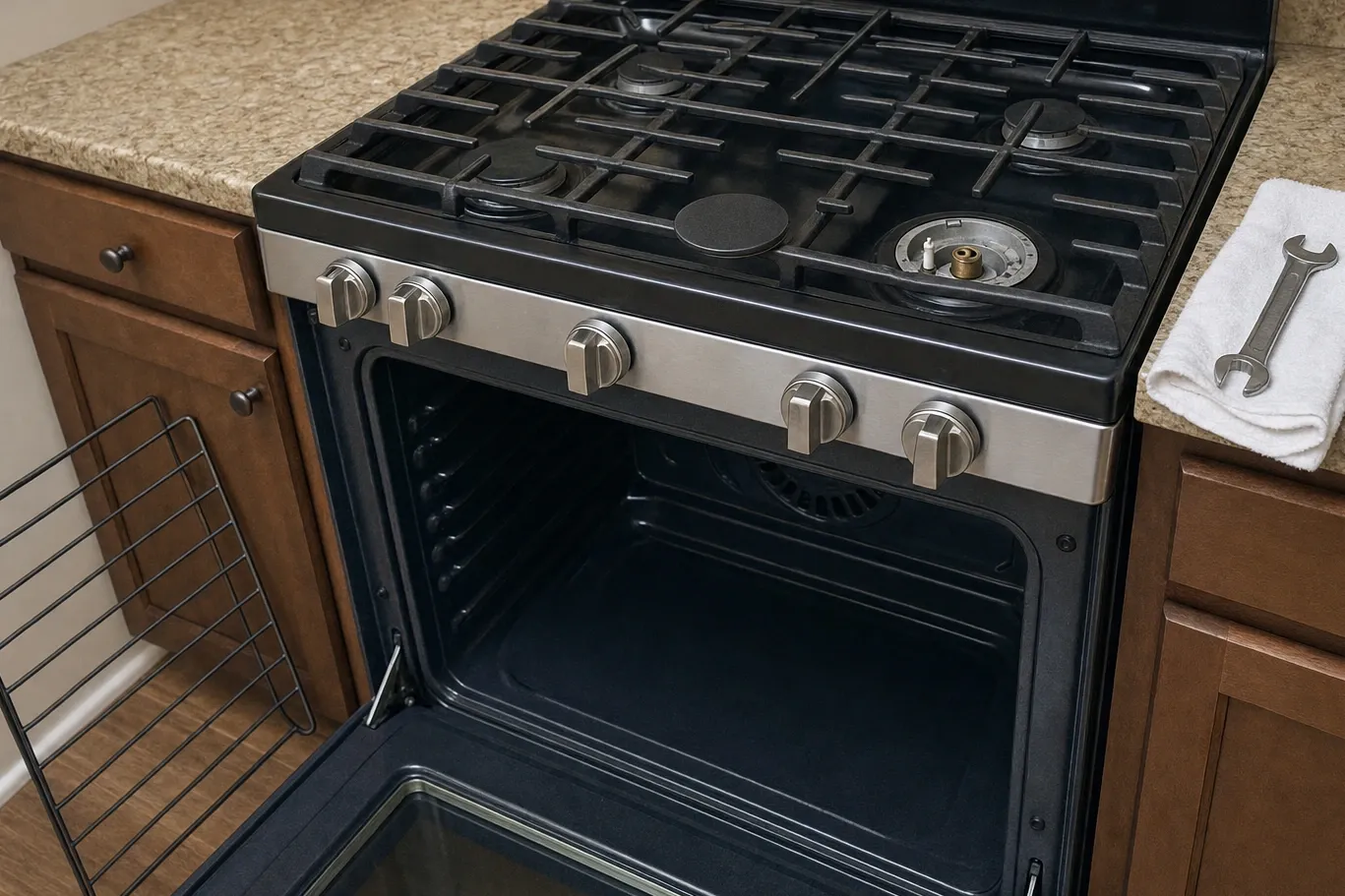 Range Repair Sealed-burner and open-burner Viking ranges and rangetops: ignition that will not catch, a flame that has changed colour or shape, and the gas-side faults a rebuilt kitchen tends to surface in its first winter. Symptoms and what gets tested
 -
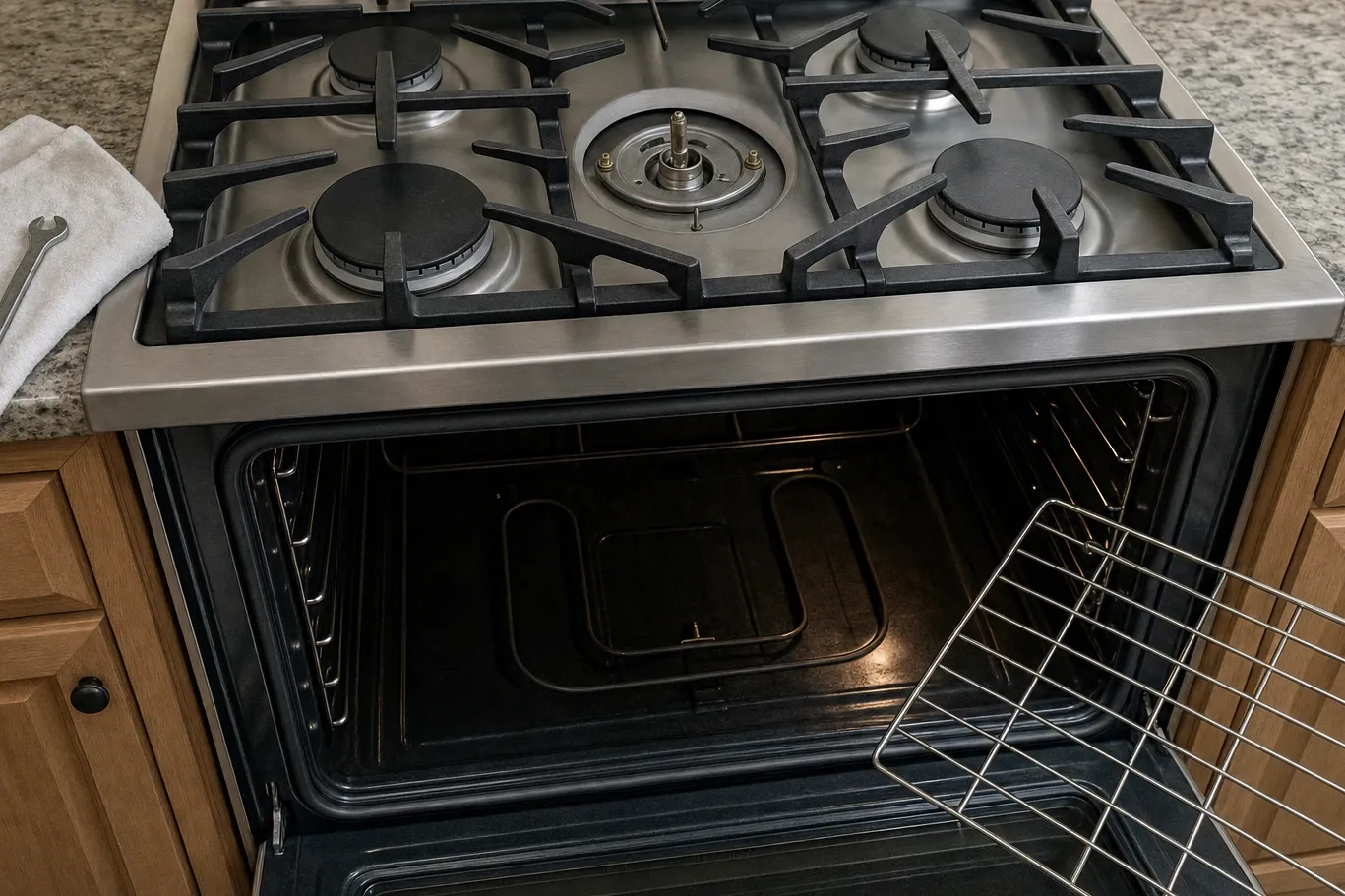 Oven Repair Wall ovens and range ovens that have stopped reaching, or stopped holding, the number on the dial — igniters, elements, thermostats, convection and the door latch that ends a self-clean locked shut. Symptoms and what gets tested
 -
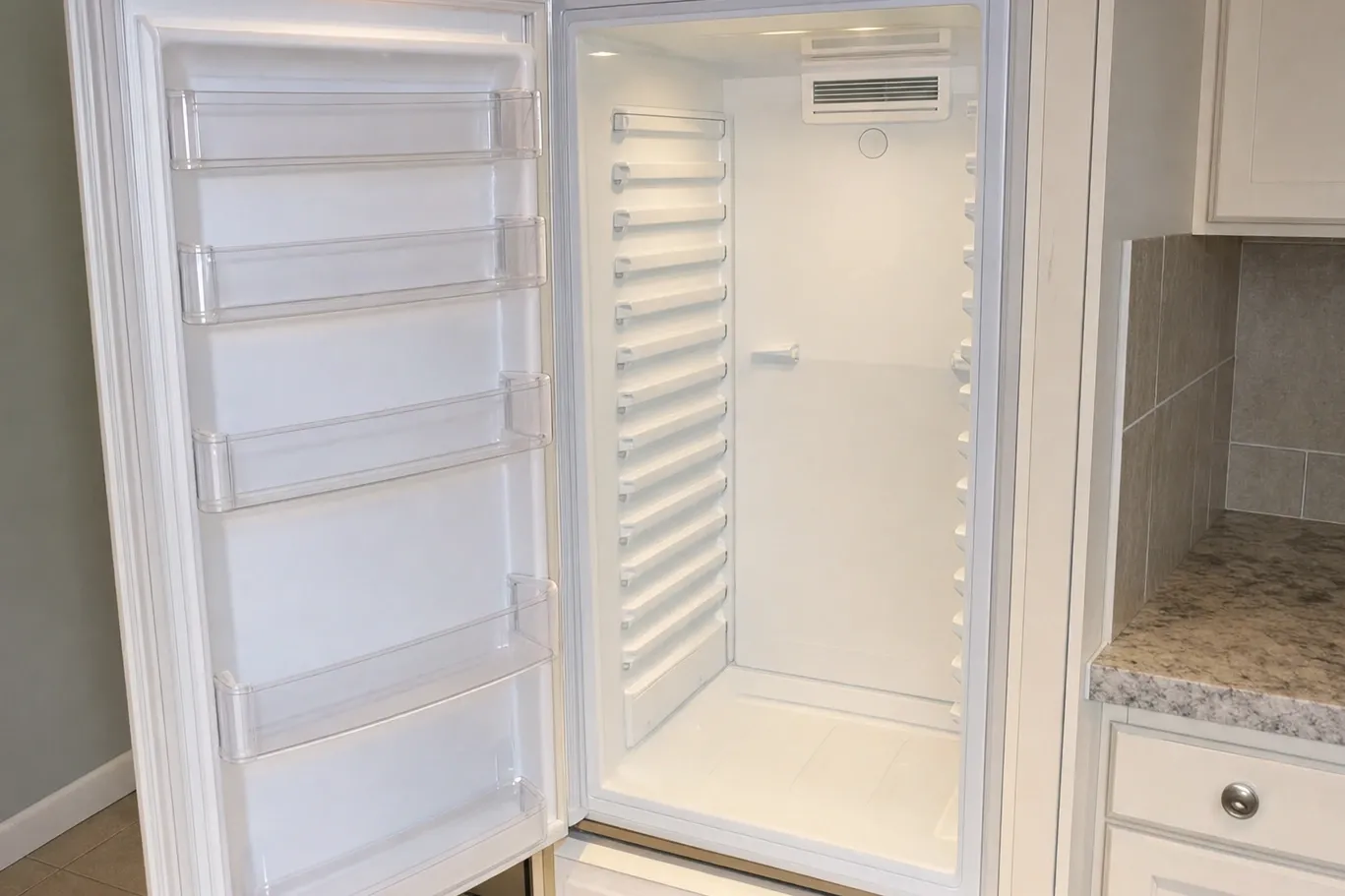 Refrigerator Repair Built-in columns, French-door cabinets and undercounter units: temperature that has drifted, frost that keeps returning, ice production that has stopped, and door seals that no longer pull shut. Symptoms and what gets tested
 -
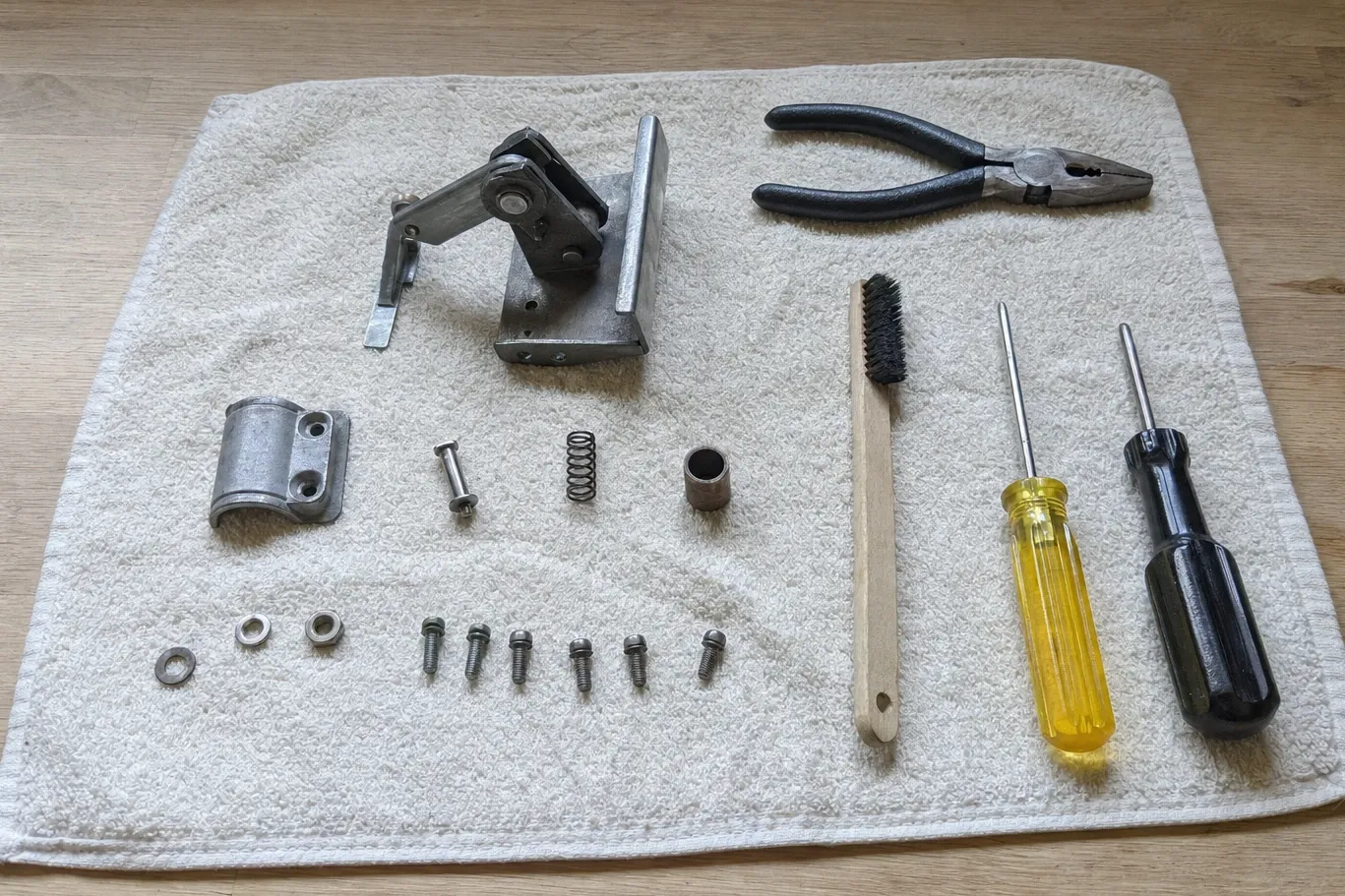 Dishwasher Repair Panel-front and stainless Viking dishwashers: fill and drain faults, wash pressure that has fallen away, heating and dry problems, and the leaks that show up at the toe kick before anywhere else. Symptoms and what gets tested
Standing behind it
What we hold, and what we leave with you
- EPA Section 608 Certified for refrigerant handling, which is what a sealed-system diagnosis on a built-in column legally requires before gauges go anywhere near it.
- Factory-spec parts Replacement parts are ordered against your model and serial. No universal igniter, no near-enough thermostat, no part chosen because it was on the van.
- Written diagnosis What was measured, what it read, and what that means, left with you on paper — whether or not you go ahead with the repair.
- Workmanship warranty The labour on a repair we carry out is warranted. If the same fault returns, the return visit is not a second service call.
Licensed, bonded and insured. We provide our licence number to customers on request.
Configurations
What comes through the door, and where the visit starts
No model numbers here on purpose — bring us yours off the frame and we will order against it. This is the shape of the appliance and the shape of the first ten minutes.
| Configuration | Usually reported as | The visit opens with |
|---|---|---|
| 30" and 36" sealed-burner range | One burner sparks without catching, or will not hold a simmer | Cap and port inspection, spark gap, manifold pressure |
| 48" range or rangetop with griddle | Uneven heat across the plate, or one section that never comes up | Per-burner pressure and orifice check under the plate |
| Single or double wall oven | Slow preheat, uneven bake, or a door locked after self-clean | Probe in the cavity, igniter current, latch motor |
| Built-in refrigerator column | Fresh-food side drifting warm while the freezer holds | Shelf temperatures, condenser airflow, evaporator fan draw |
| French-door or side-by-side cabinet | Frost returning after clearing, or ice production stopped | Forced defrost cycle, heater and thermistor, inlet valve |
| Undercounter refrigerator or wine unit | Never reaching setpoint in a cut-to-fit surround | Grille off, clearance and airflow measured before gauges |
| Panel-front or stainless dishwasher | Poor wash on the top rack, or water standing in the sump | Timed fill, spray pressure, drain path and check valve |